- Tokyo : 14:24 |
- Singapore : 13:24 |
- Dubai : 09:24 |
- London : 06:24 |
- New York : 01:24 |
- Sydney : 15:24

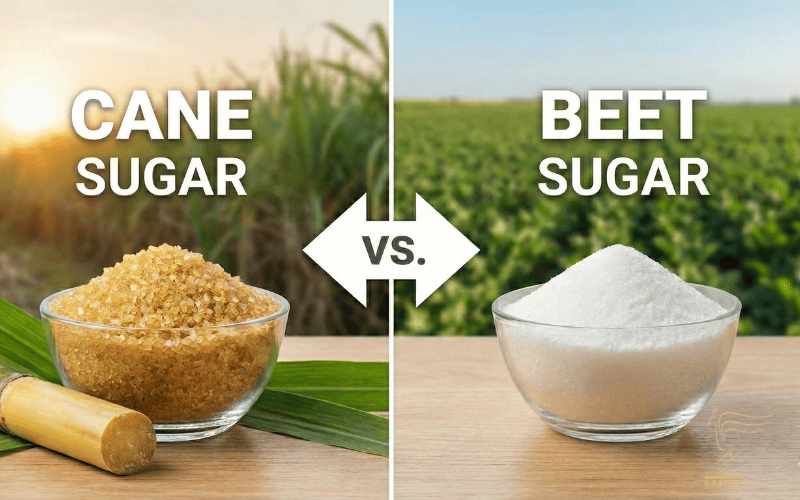
Cane sugar and beet sugar look quite identical. You may not even be able to tell them apart. However, when it comes to baking, they behave quite differently. While one is more predictable, the other can affect the texture, moisture, and flavour in sensitive recipes.
So which one should you use for baking? This blog breaks it down. It breaks down both of these sugars, their baking behaviour, and tells you which one is a better option.
Cane sugar comes from sugar cane, a tall tropical grass. After harvesting it, the juice undergoes multiple processes to create refined white sugar. You will commonly find it as one of the main ingredients for sweeteners and syrups in everyday food items. The raw sugar from sugarcane is light brown in colour due to the presence of some natural molasses; a key reason it differs from refined cane sugar, as we cover in detail here. This sets it apart from the pure white refined sugar.
Cane sugar has a slightly fruity aroma. It has a clear and sweet aftertaste.
Here’s how cane sugar affects your body:
Instant energy: Sugarcane’s contents of carbohydrates are quickly absorbed and digested in the body. As a result, even a small amount can offer an energy boost to you.
Rich in antioxidants: Sugarcane, the source food, is rich in flavonoids like tricin, Vitamin C, and minerals like zinc and selenium, which contribute to its antioxidant properties. This makes it excellent at mitigating the free radicals and preventing cellular damage.
Beet sugar comes from sugar beet, a kind of root vegetable that is closely associated with beetroot and chard. They’re explicitly grown to extract the sugar from their roots. Once they’re harvested, they undergo intensive cleaning, followed by extraction, purification, and crystallisation. The final step is centrifugation and drying. Unlike cane sugar, beet sugar processing is free of bone char or coal-based activating carbon for filtering.
Beet sugar is milder compared to cane sugar. It has a slightly earthy aroma, which almost goes undetected, with a faint burnt sugar aftertaste.
Both cane sugar and beet sugar have the same molecular structure. As such, your body similarly processes them. However, specific concerns with respect to genetically modified organisms (GMOs).
Approximately 95% of sugar beet in the US is genetically modified. Some people support it as a sustainable food source thanks to its resistance to insects, herbicides, and extremities in weather. Others prefer to avoid it due to adverse health effects. While buying, ensure it is non-GMO beet sugar.
When it comes to baking, cane sugar definitely has an upperhand. Here’s why:
Cane sugar has a fruity taste profile.
It caramelizes more evenly and at a lower temperature.
Offers predictable melting and dissolving
Consistent moisture control gives your baked goods a soft texture
It gives you a more uniform product.
In comparison, beet sugar:
Can create a crunchier texture, which only works well in very specific baked goods
It does not mix well with butter due to the larger grain size.
The baked dish may not be as fluffier as expected.
While you can still use beet sugar, you should be aware that the texture and taste may slightly vary.
GeoHoney’s Pure Organic Sugar under the ownership of B A Barry Group is sourced from 100% sugar cane or beet sugar using organic farming practices. This means that your sugar is free of any synthetic pesticides, herbicides, and genetically modified organisms (GMOs). Moreover, it is processed without artificial additives or chemicals.
They’re a rich source of antioxidants, Vitamin B6, and Vitamin C. You can expect to experience an instant energy boost, healthy digestion (when consumed in moderate amounts) and better skin and hair health.
What is better for baking, cane sugar or beet sugar?
Cane sugar is generally better for various reasons. It dissolves and caramelizes better. It also creams well with butter, another common baking ingredient and delivers more predictable results.
Can beet sugar be used in baking?
Yes, you can. However, note that the final taste and texture of the baked goods may slightly differ. Beet sugar caramelizes unevenly and may make it crunchier.
Is cane sugar a healthy sugar?
Yes, as it is slightly less processed than regular white sugar. However, like all other sugars, it should be consumed in moderation only.
Is sugar beet safe to eat?
Yes, sugar beet is safe to eat. They’re rich in fibre, vitamins, and minerals.
What is the unhealthiest sugar?
Added sugars, like high-fructose corn syrups and refined sugar, are the unhealthiest sugars to consume.