- Tokyo : 23:12 |
- Singapore : 22:12 |
- Dubai : 18:12 |
- London : 15:12 |
- New York : 10:12 |
- Sydney : 00:12

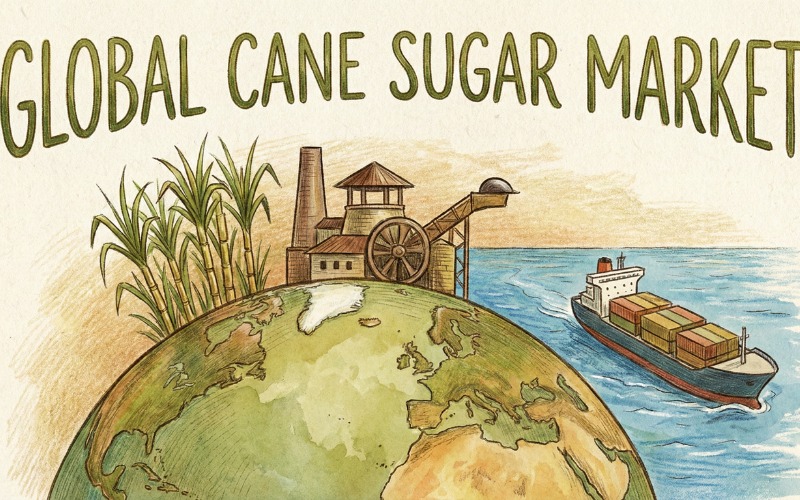
The global agricultural and food industry relies heavily on a stable cane sugar market. The increasing demand for this valuable ingredient in the food and beverage sector, as well as in industrial applications drives the growth of the market.
The progress of the global cane sugar market continues at an unprecedented rate even in the face of volatile economic and regulatory forces. This multi-billion-dollar sector grows steadily with a new focus on sustainability and technology integration. This blog looks into the latest global cane sugar market landscape in detail.
It highlights the market size and lists some key players along with a comprehensive future outlook of the cane sugar market. So, keep on reading till the end to learn more.
Global Cane Sugar Market: The Current Size and Dynamics
Key Global Cane Sugar Producers and Players
What Drives the Global Cane Sugar Industry
Key Challenges
Global Cane Sugar Market: A Future Outlook
According to a report, the global sugar market had a value of about USD 74.9 billion in 2025. This market is likely to grow to roughly USD 126.4 billion by 2033 at approximately 6.67% CAGR.
The global sugar output was about 185 million metric tons in 2024. This number will exceed 223.1 million tons by 2033, according to some recent estimates.
Several growth factors contribute to the current success of the sugar sector. These include rising demand in the food and beverages industries, high-yielding sugar-crop production, government subsidies, and increasing interest of the public in the adoption of organic and specialty sugar, etc.
This section lists some key countries as well as major industry players that lead the global cane sugar production.
The following countries are major global producers of cane sugar, according to a report by the USDA.
Brazil
Brazil stands at the top when it comes to sugar production with its 44-46 million + tons annual output. According to The Science Agriculture, the high cane sugar yield in this region results from the extensive tropical climate of the region. The use of advanced harvesting or processing tools also plays a major role.
India
India produces more than 28-35 million tonnes of cane sugar every year. High domestic consumption drives the market in this region. Several ethanol blending programs are also in place, which further increases the need for this crop.
China
China generates more than 10-11 million tonnes of cane sugar each year, mainly in the South or Southwestern regions. Most of the raw organic sugar production goes into domestic markets.
Pakistan
Pakistan’s sugar production is about 6-6.8 million tonnes per year. The provinces of Punjab and Sindh produce more than 90% of the sugarcane in this region.
Mexico
Mexico is also among the major producers of cane sugar with an annual output of 5.4-6.8 million tons. Mexico exports most of this sugar to the markets in the US.
Brazil & Latin America
The following are some major companies that lead sugar production in this region.
Copersucar
Raízen
Biosev & São Martinho
India & Asia
Here are some notable industries in this region that lead organic sugar production.
Balrampur Chini Mills
Uttam Sugar Mills Ltd.
Shree Renuka Sugars
Europe
The following are some globally significant European countries that produce cane sugar.
Südzucker AG (Germany)
Nordzucker AG
AB Sugar
Here are a few factors that drive the growth of the global cane sugar industry.
Cane sugar is a key part of so many foods, beverages, as well as bakery items. The rapid population growth results in the expansion of these industries. The taste and active properties of this sugar, like fermentation, make it an important ingredient in countless snacks or food items, which results in high demand. The high demand for sugar in the food and beverages industries thus drives the growth of the global cane sugar market.
According to a study, more than 30% of sugarcane goes into ethanol and renewable fuel production in the world. Sugarcane also serves as an effective biofuel feedstock. This further boosts the demand in this sector.
The disposable income of people in emerging economies is growing, which leads to more interest in packaged foods or sugar-based drinks, or baked goods. Sugar consumption is on the rise in regions like Asia-Pacific, Latin America, India, and Africa due to rapid urbanization, which drives the growth of this sector.
Sugarcane belongs to a multi-output family of crops. It's by-products like the bagasse finds uses in power generation. The molasses in sugar play a big role in ethanol production as well as animal feeds. The filter cake of the sugarcane is also a useful fertilizer. All these byproducts contribute a lot to the growth of the cane sugar sector.
Here are some notable challenges that the global cane sugar sector faces at this very moment.
The surplus global crop yields and less demand in recent years contribute to the price volatility in this sector. Another report shows that factors like supply/demand imbalance and inconsistent import/export volumes make it hard for producers to create stable supply chains. The global pricing volatility also results from certain export restrictions and sudden surges from major producers.
As health awareness grows, the demand for regular sugar consistently declines. Most people look for plant-based or low-calorie sweeteners like stevia, which affects the long-term demand.
Producers also have to face serious regulations like sugar taxes, tariffs, labelling requirements, or export restrictions, which affect the flow of the global supply chain.
Several factors, like drought or flood, affect yields as well as crop recovery rates. Weather constraints shorten the crushing seasons, which limit the sugar output.
Research shows there is a significant sugar yield decline in major producers like Brazil and India due to climate change or unpredictable weather patterns.
Several key cane sugar producers do not possess the right cane sugar processing or storage facilities. They also lack the necessary transportation infrastructure, and that results in inconsistent or late deliveries. This also creates volatility in the global cane sugar supply.
Consistent Market Growth
A report by Future Marketing Insights suggests that the global cane sugar market has the potential to expand to approximately USD 88.6 billion by 2035. This indicates an impressive CAGR of 3.4%.
The broader cane sugar market that includes its main value derivative can reach USD 1.9 trillion by 2035 with an expected volume of about 2,264 million tons.
Sustainability and Circular Economy
Many cane sugar producers will focus more on sustainable farming practices. The optimization of agriculture methods, as well as cane sugar processing, promotes water conservation and a reduction in the overall carbon footprint.
The use of cane sugar byproducts like bagasse for bioenergy and bioplastics supports the circular economy. This contributes to the stability of many global cane sugar and sugar-related industries.
A Rise in the Demand for Specialty Sugars
Many experts suggest that the adoption of specialty or organic sugar will grow as more people become health-conscious. Specialty sugars with low glycaemic index will dominate the market due to their health benefits. The demand for diversified by-products such as syrups or molasses will also grow in the years to come.
No one can deny the resiliency or strategic importance of the cane sugar market in recent years. The consistent growth of this sector balances the traditional food demand and the emerging power or sustainability trends.
This sector is experiencing considerable expansion in developing regions. The renewable fuel sector is another major driver behind the high demand for this commodity.
This generates so many compelling opportunities for stakeholders across the board who can gain long-term benefits by leveraging this stable as well as rapidly expanding industry.
Visit us at BA Barry Group today to explore our premium cane sugar that promises the highest purity and quality in all applications.
The value of the global sugar market in 2025 was USD 63.4 billion. The growth will reach about USD 88.6 billion by 2035, according to most estimates.
This market will grow at a rate of approximately 6.67% CAGR from 2025 to 2030.
Some popular trends include the adoption of specialty sugars as well as high ethanol demand. The expansion of the food and beverages industries in growing economies also drives this growth.
Major players in the global cane sugar market include
Raízen
Louis Dreyfus Company
Cosan Limited
Suedzucker AG
Currently the Asia Pacific region dominates this industry sugar market with more than approximately 43.67% of the share.