- Tokyo : 02:28 |
- Singapore : 01:28 |
- Dubai : 21:28 |
- London : 18:28 |
- New York : 13:28 |
- Sydney : 03:28

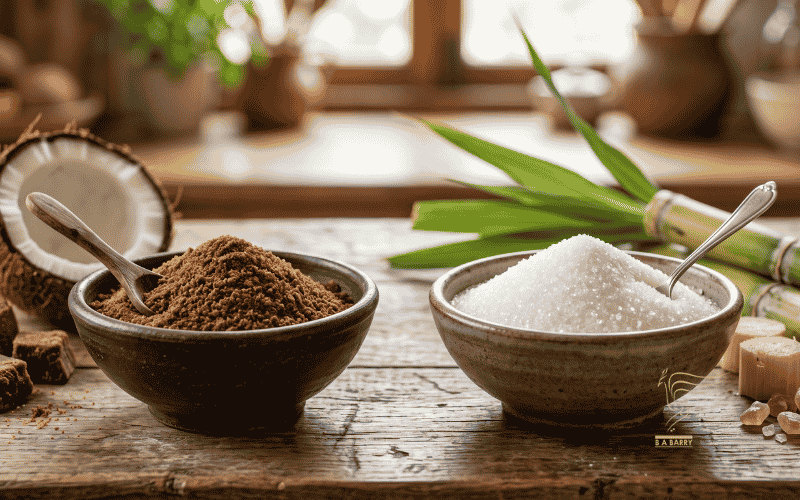
Sugar is a highly sought-after commodity, and it has been like that for a very long time. Every food and beverage industry needs it and kitchens cannot work without it. You can find several types of sugar in the market. One of the most popular and widely used options is cane sugar, which itself comes in different forms; refined cane sugar and raw sugar each behave differently depending on how they are processed.
But as the health and wellness trends get popular, many people are turning to organic sugar alternatives. Among these alternatives, coconut sugar has become a top priority for many buyers.
Both coconut sugar and cane sugar have several differences that set them apart. The origins and processing methods of these sugars vary greatly. This impacts their nutritional value, flavors, and health benefits.
This blog looks into what makes these sugars so different. So, keep on reading till the end to learn more.
What Is Coconut Sugar?
What Is Cane Sugar?
Coconut Sugar vs Cane Sugar: A Quick Comparison
Coconut Sugar vs Cane Sugar: Key Differences
Coconut sugar refers to a natural sweetener that comes from the sap of the coconut palm tree. This natural and minimally processed alternative to refined sugar comes in a brown color. It also has a granular texture along with a mild caramel flavor.
The global coconut sugar market currently has a value of $1.5–2.6 billion (2023–2026 range) and projections that it will reach $4.8 billion by 2030 with a CAGR of about 4–8.7% CAGR.
Asia-Pacific regions like Indonesia, Thailand, and the Philippines produce more than 70–80% of global coconut sugar. Unlike cane sugar, coconut sugar doesn’t undergo intense chemical treatment, which allows it to retain its natural flavor as well as nutrients.
How it is Made
First, local farmers make small cuts in the flower stems of the coconut palm tree to access liquid sap.
They heat this sap to remove most of the water. This creates a thick syrup.
The heating continues until the syrup crystallizes in the form of brown granules.
Then they cool the crystals at room temperature and grind the granules to make finely powdered coconut sugar.
Cane sugar refers to refined sugar that we obtain from the juice of sugarcane plants. Refined sugar has a pure white color with a neutral sweet flavor. Organic cane sugar has a brown hue with a rich molasses-like flavor. Most refined cane sugar products consist of very fine, dry crystals that easily dissolve into most recipes.
The global refined cane sugar market was valued at about $49.2 billion in 2024 and is projected to reach $66.8 billion by 2033 with a CAGR of 3.4%. The high processing of this sugar strips it of most of its nutrients.
Refined cane sugar accounts for approximately 1/3rd of global sugar manufacturing revenue. This makes it among the most widely traded and consumed sugar types globally.
How it is Made
The first step is the cutting of sugarcane stalks.
After transportation to the sugar mills, these stalks are crushed to obtain sugarcane juice.
This juice undergoes clarification via lime and heat treatment.
Then, manufacturers evaporate the water from the juice to get a thick syrup.
Soon sugar crystals form in the syrup.
Then centrifuges are used to separate molasses from sugar crystals.
Further purification and bleaching lead to the formation of refined sugar, like ICUMSA 45 sugar.
Here is a quick comparison between cane sugar and coconut sugar to give you an idea.
The following are some major differences between coconut and cane sugar that make them stand out.
Taste
Coconut sugar has a rich, caramel or toffee-like flavor. This sugar is less sweet than cane sugar. It adds a certain depth to every recipe that it is a part of. This sugar is perfect for recipes where you want to achieve a dense or dark texture.
Cane sugar, on the other hand, has a neutral sweetness. The fine consistency of this sugar allows it to blend seamlessly with countless beverages as well as baked goods.
Culinary Uses
Food & beverage industry uses more than 64% of coconut sugar, and the household consumption is about 21%. Coconut sugar can be used in countless recipes as an alternative to regular sugar. However, its use alters the color, texture, and flavor of these recipes to some extent. Coconut sugar finds use in coffee, tea, bakery items, sauces, glazes, etc.
Cane sugar’s neutral taste can enhance other ingredients in diverse recipes. It finds uses in desserts, processed foods, beverages, candy making, chocolates, and more.
Nutritional Differences
Coconut sugar undergoes minimal processing. This makes it a nutritionally superior product. This sugar contains key minerals like zinc, iron, and calcium that support heart health, immune function, and bone strength. It also has antioxidants and healthy fibers. These nutritional components of coconut sugar lead to slower glucose absorption and better gut health.
Cane sugar, on the other hand, contains no fibers, vitamins, or minerals. This sugar contains carbohydrates in large concentrations, which give you a quick energy boost.
Glycemic Index
Another difference between cane sugar and coconut sugar lies in their glycemic index. The GI of coconut sugar is slightly lower, i.e., about 50–54. This results in a gradual rise in your blood glucose after consumption.
Cane sugar, on the other hand, has a higher GI of about 58–60, which raises your blood sugar abruptly. It is still important to note that the difference between the GI of these sugars is not considerable. This means you need to consume them both in moderation.
Coconut and cane sugar differ in terms of processing, flavor, and culinary uses. Coconut sugar is a slightly healthier, nutritious, and safer alternative to regular sugar.
Cane sugar, on the other hand, gives you greater cooking versatility and affordability. Just remember that moderate consumption of both these sugars is the key to a healthier life without sacrificing sweetness altogether.
An understanding of these sugar varieties can help you pick one that not only meets your health goals but also elevates every recipe in flavor, texture, and more.
Visit us at BA Barry Group today to order our premium quality organic and cane sugar for all personal and bulk commercial applications.
You can substitute this sugar in a 1:1 ratio with regular cane sugar to get the same level of sweetness. You may experience some change in the flavor or color of the recipe when you make this switch.
This sugar has a rich, caramel-like flavor.
Coconut sugar is slightly more nutritious than cane sugar. However, excessive consumption of both can have adverse effects on your health.
Excessive consumption of any type of sugar, including coconut sugar, raises triglyceride levels. This lowers your HDL and increases the risk of heart disease.
Coconut sugar’s glycemic index is low. This sugar doesn’t cause blood sugar spikes. This makes it generally safe for people with diabetes. However, moderate consumption is still recommended as coconut sugar is essentially a source of glucose.
The glycemic index of coconut sugar is much lower than that of jaggery. This makes it a better option for people who wish to manage their diabetes.
READ MORE:
How to Read a Sugar Certificate of Analysis (COA): A Buyer's Checklist
Top Sugar Producing Countries in 2026
Cane Sugar vs Raw Sugar: What's the Difference?