- Tokyo : 22:19 |
- Singapore : 21:19 |
- Dubai : 17:19 |
- London : 14:19 |
- New York : 09:19 |
- Sydney : 23:19

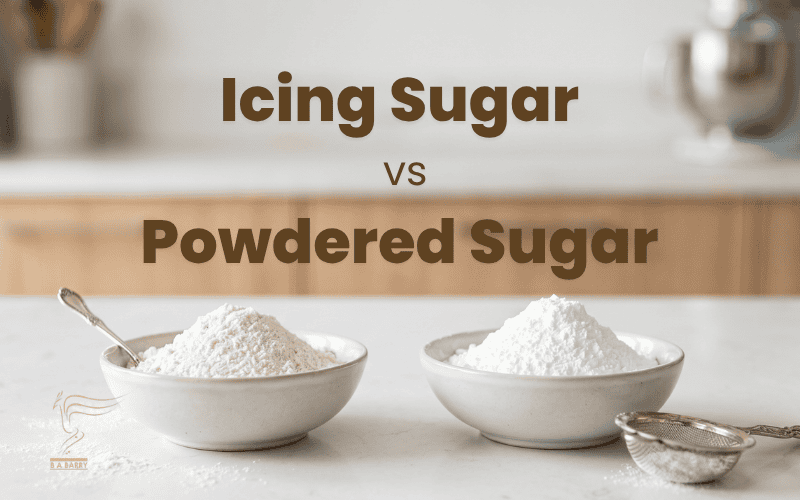
Baking enthusiasts often feel at a loss when they come across a common ingredient named icing sugar or powdered sugar in their recipes. This happens more often when you try a foreign recipe for the first time.
In some parts of the world, the term icing sugar is used more widely, while in others, powdered sugar is the name they use for finely ground table sugar.
But are these two organic sugar types really different in their essence, or is it just the naming convention? This blog looks into icing and powdered sugar in detail, highlighting their key aspects to help you understand whether they are really the same or not.
What Is Powdered Sugar?
What Is Icing Sugar?
So, Are They the Same?
Powders Sugar vs Icing Sugar: Subtle Differences
Powdered sugar refers to finely ground white sugar. Most American baking recipes use this name when they refer to ultra-fine powdered granulated sugar. To make this sugar, manufacturers add some anti-caking agent or cornstarch to the mix. This mainly serves to prevent the sugar from clumping, which enhances its shelf life.
Powdered sugar is a functional ingredient in confectionery and baked systems due to its very small particle size, rapid dissolution, and surface-coating ability.
Key Features
This sugar has a very fine texture that resembles soft flour. This is what makes this sugar blend seamlessly in most recipes.
It has a bright white appearance that makes it perfect as a decorative item in recipes.
This sugar contains about 3–5% cornstarch to prevent moisture absorption.
Common Applications
This sugar is used in countless desserts as it gives them a smooth, creamy texture.
This sugar is a part of buttercream, cream cheese frosting, and glaze icings as it blends well without creating grittiness.
Bakers also buy organic sugar in this form to stabilize whipped cream and add a lightly sweet flavor to it.
Many bakers use it to dust desserts. You can sprinkle it on brownies, pancakes, waffles, doughnuts, and many other items.
It is also ideal for no-bake desserts like fudge or cheesecake fillings.
Icing sugar is a term that you often come across when following recipes from the UK, Australia, and some European countries. The function and composition are the same as powdered sugar in this case.
The process of making this sugar is pretty simple. You just grind it into a powder and mix a small quantity of anti-caking agent during the process.
Key Features
Like powdered sugar, icing sugar also has a soft powdery consistency that feels silky to the touch.
Different brands name it differently, such as “icing sugar,” “icing mixture,” or even “pure icing sugar”.
It comes with anti-caking agents that allow it to remain lump-free for a long time.
It creates smooth and glossy finishes in most recipes, just like ultra-fine ICUMSA 45 sugar.
Common Applications
This sugar serves both decorative and confectionery purposes
It is used to make buttercream icing with a fluffy and spreadable texture.
It finds use in cookies and cakes as a decorative element.
You can use it to create thin coatings over pastries or other desserts.
Icing sugar is excellent for glazing or drizzling in recipes.
Both the appearance and purpose of icing and powdered sugar are the same in all practical applications. They differ only in terms of regional terminology rather than functionality.
This means you can easily use raw organic sugar in ultra-fine form in recipes that either ask for icing or powdered sugar. It is also worth noting that different manufacturers can produce this sugar with different additives or with different levels of fineness. This is why it is always a good idea to check the packaging for such information. This can help you choose a product that brings the best out in your recipes.
Though in principle, both icing and powder sugar are practically the same, there can be a few subtle variations between the two based on brands or regions. Here is what we mean by that.
Naming Conventions
The naming conventions of this type of organic cane sugar are different in various parts of the world. Countries like Canada and the USA commonly use powdered sugar. Countries like the UK, Australia, and some other commonwealth countries use the term icing sugar.
Label Variations
If the label says “pure icing sugar”, it typically means there are no additives like starch in the icing sugar. This sugar tends to clump easily. However, if the label says “icing mixture”, it means there are some additives like anti-caking agents that not only prevent clumping but also affect the final baking product.
Texture Grades
The fineness of sugar affects the spread ratio, hardness, moisture retention, and color formation (Maillard browning) in baking recipes. The fineness of all icing or powdered sugars is also not the same. Standard grade icing/powdered sugars find most uses in domestic baking. Extra-fine or 10X sugars, on the other hand, are what professional or commercial-level bakers use to make delicate icing or desserts.
Icing and powdered sugar refer to the same baking ingredient, i.e., ultra-fine ground sugar. Recipes use different names only because of certain naming conventions in different parts of the world.
This type of sugar comes with a silky, or fine flour-like texture that blends well with almost every baking recipe. So, the next time the recipe asks for icing sugar, but your product packaging says powdered sugar, do not get confused. Just use the icing/powdered sugar that you have in the same amount to get the best results every single time.
Visit us at BA Barry Group today to buy premium quality organic and refined cane sugar in bulk for all commercial and personal uses to level up your every recipe instantly.
Yes. Icing sugar and powdered sugar refer to the same finely ground white sugar that contains some anti-caking agent like cornstarch.
No matter whether your recipe calls for an icing or powdered sugar, you can use one for the other without any difference in the flavor, texture, or appearance.
Most products come with 3-5% cornstarch. However, in some rare cases, the product label may say that it contains “pure icing sugar” with no additives. This is why not every powdered or icing sugar contains cornstarch, and you need to look at the label carefully.
Technically, you can use table sugar for icing. It however, leads to a slightly different, less smooth texture of the baked item.
You can sift this sugar through a fine sieve to separate lumps. You can also blend it to restore its smooth texture.
READ MORE:
Coconut Sugar vs Cane Sugar: Key Differences
Cane Sugar vs Raw Sugar: What's the Difference?
Top Sugar Producing Countries in 2026
How to Read a Sugar Certificate of Analysis (COA): A Buyer's Checklist