- Tokyo : 14:22 |
- Singapore : 13:22 |
- Dubai : 09:22 |
- London : 06:22 |
- New York : 01:22 |
- Sydney : 15:22

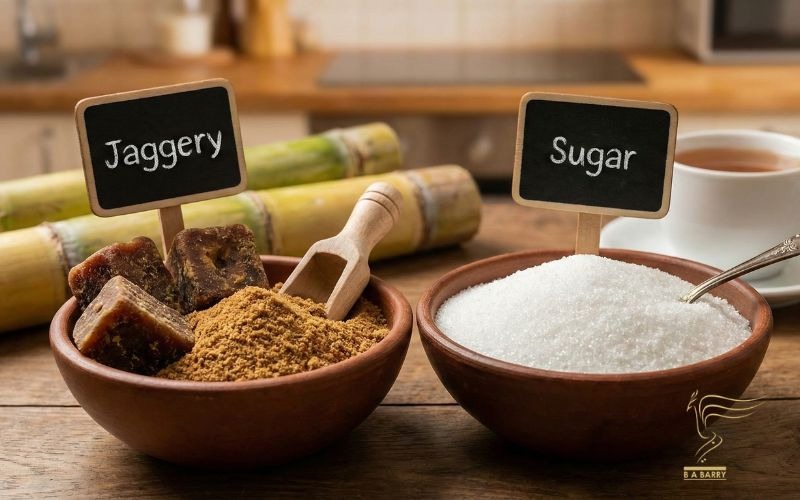
Sweeteners are a key commodity in the food sector. The quality or the type of sweetener directly affects the flavor, nutritional value, and the overall consumer perception of the food products you manufacture.
Jaggery and sugar are among the most common sweeteners that most food manufacturers use. These sweeteners have different compositions, and they behave differently when you add them to any recipe.
This is why every food manufacturer needs to learn more about the key features as well as the differences between jaggery and organic sugar — and within sugar itself, the distinction between raw and refined cane sugar matters just as much for production planning. This comprehensive blog will help you figure out which of these sweeteners can help you deliver the highest quality food products to your consumers. So, stay with us to learn more.
What is Jaggery?
What is Sugar?
Jaggery VS Sugar: Nutritional Differences
Jaggery VS Sugar: Key Functional Differences That Every Food Manufacturer Must Know
Jaggery is a traditional natural sweetener that you get by concentrating sugarcane juice. The processing of this sweetener involves heating or boiling the sugarcane juice until it solidifies. This mixture is then cooled for hours to get the final product. There is no removal of molasses in jaggery production, which keeps its natural nutrients intact.
Key Features
It comes in a light to dark brown color.
Its flavor is very rich and complex with caramel and molasses notes.
It comes with trace minerals like iron, calcium, potassium, etc.
Jaggery comes in granular, block, or even liquid forms.
The regular organic cane sugar consists of sucrose that you get after processing the juice of sugarcane or sugar beets. The extensive processing of this sugar removes most of the molasses and nutrients from it.
The production of this sugar involves several steps. First, you extract the sugarcane juice using heavy rollers. This juice undergoes clarification to remove dirt or plant fibers. This juice is heated, which further coagulates impurities. Then you concentrate this juice in evaporators to remove water. This gives you a thick syrup.
Then you add seed crystals to this syrup to trigger crystallization. This creates a mixture of liquid syrup and crystals. This mixture undergoes centrifugation, which separates crystals from the molasses.
After drying, you get a final product with fine, uniform crystals that manufacturers package and ship globally.
Key Features
This sugar comes in a pure white crystalline form.
It has a neutral, sweet flavor.
You can find it in different quality grades.
This sugar is highly stable and less prone to spoilage.
Most industrial food manufacturers prefer sugar for its uniform consistency and flavor.
Jaggery and raw organic sugar possess different nutritional profiles. This is because of the variation in their production methods. This section lists the nutritional differences between these two in detail.
The following are some major functional differences between sugar and jaggery that every food manufacturer must know. This information can help you decide whether to buy organic sugar or jaggery for your next batch of food products.
Sugar is mostly sucrose, which has a very high sweetness index. Jaggery possesses lower perceived sweetness as it has a high concentration of molasses in it. In most recipes, you need to add 5-15% more jaggery to match the sweetness of the sugar.
Jaggery’s high reducing sugar, minerals, and molasses contents can trigger the Maillard reaction in baked goods. This creates food items with deeper browning as well as complex flavors. Recipes that include jaggery possess denser or darker crumbs.
Sugar, on the other hand, gives you a very controlled caramelization. The cleaner flavor profile of the sugar allows every recipe to shine. Sugar creates baked items with airier or lighter textures.
Jaggery is less stable than sugar. The high humidity sensitivity of jaggery makes it prone to fermentation or microbial growth. Under normal conditions, jaggery has a shelf life of about 6-12 months.
Sugar’s very low moisture content makes it more stable. Properly stored sugar has an indefinite shelf life.
Sugar is an abundant commodity that food manufacturers use globally. You can find sugar in multiple grade options like raw, ICUMSA 45 sugar, and ICUMSA 100, to name just a few. Large-scale availability of regular sugar eliminates sourcing issues or supply chain disruptions.
Jaggery, on the other hand, is often regionally sourced. This sweetener doesn’t have a consistent quality between different suppliers. Limited seasonal production cycles, along with a growing demand, can create supply chain issues if you go with jaggery.
The cost of jaggery is about 2-3 times higher per kilogram in comparison with the same amount of sugar. This higher cost results from the production variability of this commodity.
Jaggery also undergoes additional testing, which further drives the premium pricing of this sweetener in major export markets.
Both jaggery and sugar possess unique flavors, health benefits, and functional properties. Jaggery undergoes minimal processing, which allows it to retain most of its molasses content. This gives it a rich flavor that stands out in recipes.
Regular sugar, on the other hand, comes with a fine texture and a neutral sweet flavor that amplifies countless food items that you manufacture in bulk.
For food manufacturers, the choice between these two sweeteners has significant effects on the functional performance of the food, consumer perception, costs, and brand positioning.
A deeper understanding of these sweeteners can thus help manufacturers make better strategic decisions that align with consumer expectations as well as market trends.
Visit us at BA Barry today to get the highest quality and pure organic sugar for all personal as well as bulk commercial applications.
It is possible to replace sugar with jaggery in most recipes. However, you need to keep in mind that the addition of jaggery can alter the flavor and the color of the food products considerably. This is why you should be careful when experimenting.
The major difference between the two is in their processing. Jaggery is rich in molasses, while regular sugar undergoes intense processing, which removes most of the molasses. Sugar tends to be very sweet, while jaggery possesses a deeper caramel-like taste.
You must store jaggery in an airtight container. Also, make sure to place it in a dry and cold space. Jaggery spoils faster if it comes into contact with moisture, and that is why you need to be careful when storing it. You can store sugar at room temperature in a dry cabinet or pantry.
Jaggery comes from minimal processing or filtration of the sugarcane juice. This allows it to retain most of its vital nutrients, minerals, and molasses. This makes it a healthier option than regular sugar.
The cost of jaggery is 2-3 times more than the same amount of sugar, mainly due to its limited production.
Sugar can have an indefinite shelf life when you store it in a dry or cool place. Sugar’s low water content makes it last much longer. Jaggery, on the other hand, can spoil easily as it is more susceptible to mold or fermentation. Jaggery has a shelf life of 6-12 months under normal conditions. High-quality jaggery that has been sealed properly can last 3-5 years maximum.