- Tokyo : 16:24 |
- Singapore : 15:24 |
- Dubai : 11:24 |
- London : 08:24 |
- New York : 03:24 |
- Sydney : 17:24

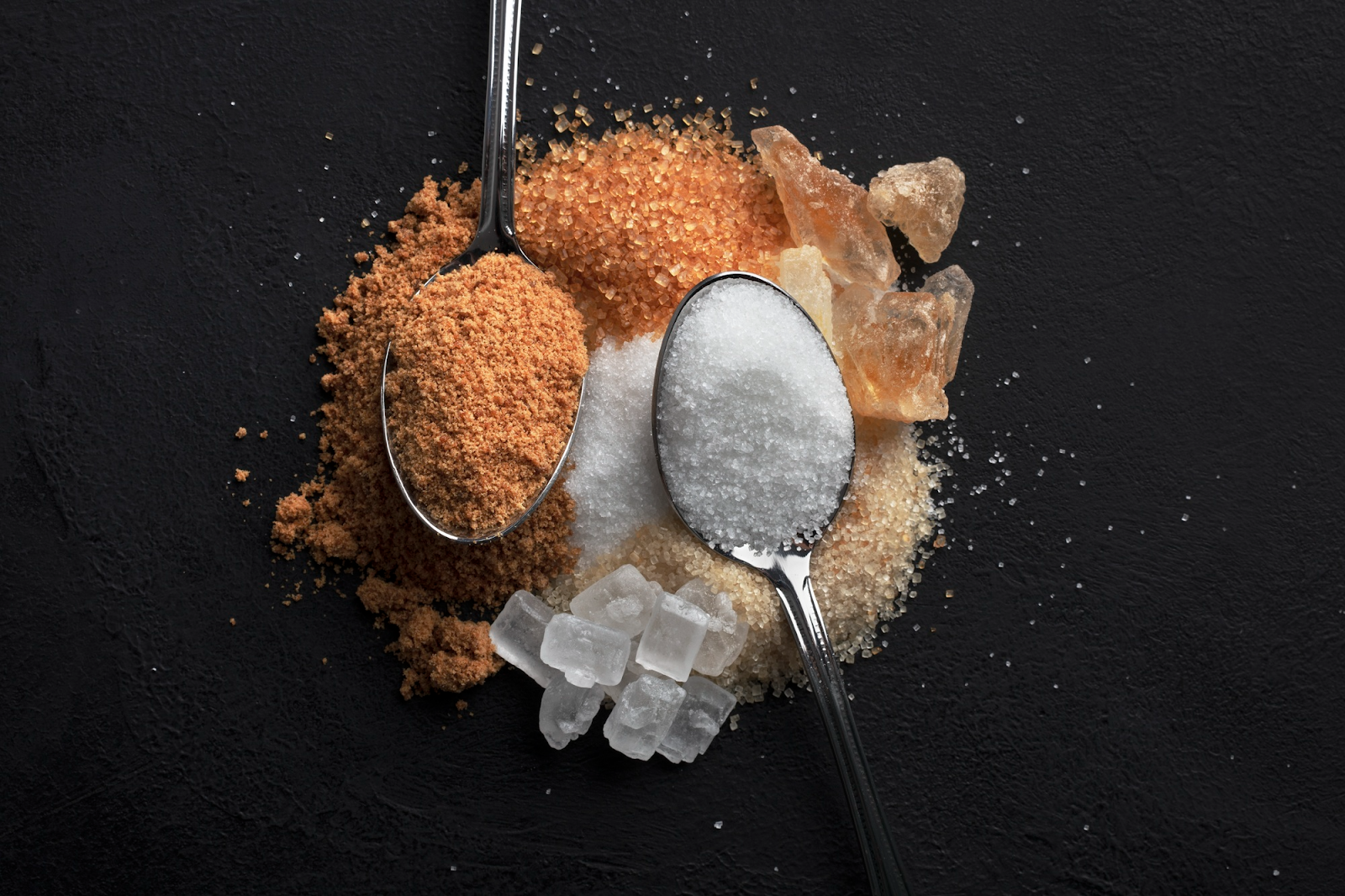
Sugar is, without a doubt, the most important global commodity of all time. It sweetens your beverages and serves as the foundation of all baked goods. According to a study, the global sugar production was 180.4 million tons in 2024, while the consumption climbed to 180.7 million tons, which shows a record 1.7% increase on a year-on-year basis.
You can find sugar in two major forms, i.e., white sugar and brown sugar — and even within white sugar itself, raw and refined cane sugar differ in flavor and processing. Both of these sugars come with different nutritional profiles. They also behave differently when you use them for baking.
This blog compares White Sugar with Brown Sugar to help you understand which is better for your health and baking needs. So, keep on reading till the end.
What is White Sugar?
What is Brown Sugar?
White Sugar vs Brown Sugar: A Comparison of Their Nutritional Profiles
White Sugar vs Brown Sugar: How They Impact Your Health
The Role of White Sugar and Brown Sugar in Baking
White sugar or refined sugar comes from the juice of sugarcane or sugar beets. In this sugar, the molasses content is very low.
Research shows that white sugar makes up about 59% share of the industrial sugar market. This is due to its low cost and several functional properties that make it effective for baking.
To make white sugar, you extract the sugarcane juice from the stalks by crushing them in the mills. This juice undergoes purification, which removes plant fibers, minerals, and other impurities.
Then you do a Lime (Ca (OH)₂) and heat treatment. This results in a clear, thin juice. Then you boil this juice to evaporate water and create a thick syrup called molasses.
Then you use vacuum pans to boil the thick syrup until you observe sugar crystal formation. After that, centrifuges separate the crystals from molasses. Then you dissolve the crystals in water and treat them with activated carbon or bone char, which removes the color.
You filter and crystallize again to get white sugar crystals. Finally, you dry the crystals in hot air to get pure white sugar.
Key Features of White Sugar
It is colorless when added to other ingredients.
It is odorless and possesses a very sweet flavor.
It comes in a dry and fine texture.
This sugar has a long shelf life.
It dissolves easily in liquids.
Brown sugar is a mix of white sugar with molasses. To make this sugar, the manufacturers either stop the refining process early or add molasses back into the refined sugar at the very end. To make this sugar, you mix about 5% molasses into 95% of refined sugar.
Research shows that the brown sugar represents approximately 32% of the total Industrial Sugar Market and is primarily used in the bakery or confectionery industries.
The brown sugar gets its brown color and flavor richness due to the presence of molasses. The amount of molasses added back in changes the flavor, color, as well as moisture content of this sugar.
To make this sugar, you extract the sugarcane juice and purify it with heat treatment. Then you boil this juice until you notice crystallization. Then you stop the heating to stop the crystallization earlier. This retains some of the molasses in the sugar. Then you separate the crystals with centrifuges to get brown sugar.
Key Features of Brown Sugar
Light brown sugar has about 3–4% molasses. It possesses a mild caramel flavor. It is ideal for cookies, muffins, and sauces.
Dark brown sugar has about 6–7% molasses. It has a deeper flavor, which makes it perfect for gingerbread, barbecue sauces, and rich desserts.
Brown sugar has a moist or soft texture.
It has a rich caramel or toffee flavor.
This sugar tends to be slightly more acidic than white sugar.
Before we look into the effects of white and raw organic sugar for health and baking, let’s first discuss the nutritional profiles of these sugar types briefly.
The following are a few points that show how organic brown sugar and white sugar impact your health.
Blood Sugar Levels
The glycemic index of white and organic sugar is almost the same. Excessive consumption of these sugars can raise your blood sugar levels quickly. This is why people with diabetes should limit the intake of these sugar types as much as possible.
Weight Gain
Both of these sugars are rich in calories that lead to an increase in fat storage. High sugar intake is a major cause of obesity in most people.
Dental Health
Sugar leads to the growth of harmful bacteria in your mouth. This makes you prone to tooth decay as well as many gum diseases.
Heart Health
Excess white sugar consumption increases triglyceride levels and inflammation in your body. This leads to higher risks of cardiovascular diseases. Organic sugar also raises triglyceride levels, which is why you need to consume both of these sugars carefully.
Risks of Fatty Liver Disease
Many experts link high white sugar consumption with non-alcoholic fatty liver disease. The risks are slightly lower for people who consume organic sugar in moderation.
Both white and brown sugars have different uses in baking. This is due to their different molasses content and flavor profiles. This section looks into the main effects of these types of sugar for baking to give you a better idea.
White Sugar
This is pure sucrose that comes with a neutral sweetness. This sugar is perfect for recipes like cakes or cookies that need a light, dry, and crispy texture. This sugar allows for more spread in cookies. This sugar is also perfect for recipes that require lighter colors. The neutral pH of this sugar makes it perfect for use with baking powder.
This sugar finds uses in
Meringues
Angle Food Cakes
Sponge Cakes
Cookies
Biscuits
Brownies
Organic Sugar
This sugar contains more molasses, which gives it a dark brown color along with a deep and complex flavor. The rich caramel-like flavor of this sugar can dominate other flavors like vanilla or fruit in some recipes.
The high moisture content of organic sugar makes it perfect for recipes that require a soft or chewy texture. High moisture and acidity of this sugar give the recipes less spread, which leads to denser crumbs.
The molasses in this sugar leads to a stronger Maillard reaction, which promotes faster browning. This sugar reacts well with baking soda to create extra lift in baked goods.
Organic sugar finds applications in the following recipes.
Brownies
Banana Bread
Caramel Sauces
Gingerbread
Chocolate Chip Cookies
Barbeque Sauces
When choosing a sugar type for your baking or health, you need to keep the end goal in mind. If you want sugar with higher mineral content and a rich flavor, you can go with brown sugar.
However, if you are a baking expert who loves to try out unique recipes, you need white sugar that is more functional. No matter the type of sugar you choose, you need to remember that moderation is key.
Both of these sugars are rich in calories, and they come with a similar GI, which means you always need to consider the long-term health effects whenever you use them in your daily routine.
Visit us at BA Barry Group today to source high-quality brown sugar and white ICUMSA 45 sugar in bulk for all large-scale applications around the globe.
Brown sugar and white sugar have slightly different nutritional contents. Brown sugar has a higher mineral content due to the presence of molasses. This makes it a healthier option.
Both brown and white sugars have a similar GI, which means they can lead to a spike in blood sugar levels. Diabetics should use this sugar in moderation to prevent complications.
Experts recommend the use of granulated sugar that you get from sugarcane or sugar beets for baking. This sugar easily dissolves and creates air pockets that elevate the texture or flavor of every recipe.
This sugar is an effective softening agent. It creates a chewy texture by reducing the free water content in different recipes.
Low GI options like fruit juices or honey are a healthy sugar alternative. You can also go with molasses and maple syrup, as they contain natural sugar that has less harmful effects on your body.