- Tokyo : 00:53 |
- Singapore : 23:53 |
- Dubai : 19:53 |
- London : 16:53 |
- New York : 11:53 |
- Sydney : 01:53

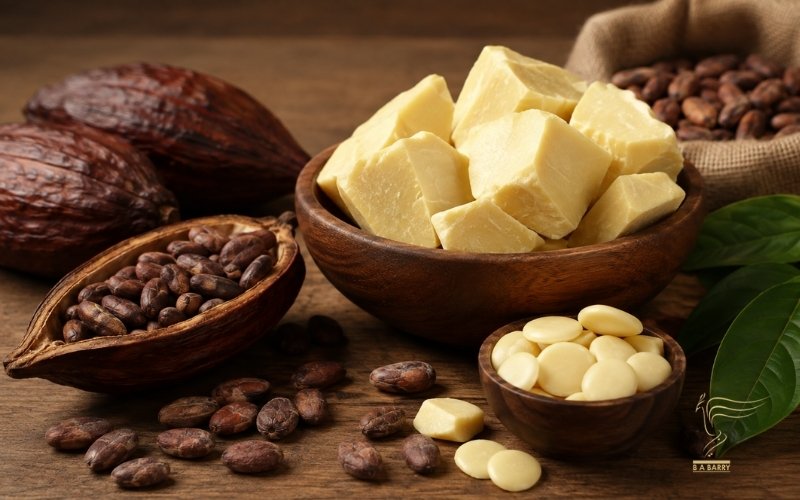
Cocoa butter is among the most precious commodities derived from cocoa. It’s extracted from the cocoa bean and has applications in the food and drink, cosmetic, and pharmaceutical industries, to name a few.
However, many buyers feel at a loss when they set out to source it in bulk. This happens mainly because they do not know the different grades and substitutes available.
In this blog, we’ll cover what cocoa butter is, how it is made, and what to look for when you buy it in bulk.
What Is Cocoa Butter?
How Cocoa Butter Is Made
Types of Cocoa Butter
Key Properties of Cocoa Butter
Uses of Cocoa Butter
How to Source Cocoa Butter in Bulk
Cocoa butter is the natural edible fat extracted from the cocoa bean. It is also known as theobroma oil and comes from the Theobroma cacao tree. That’s the same source from which cocoa powder and chocolate are made. Cocoa butter makes up a large part of the bean, roughly 50–55% of the cocoa nib by weight.
This fat is solid at room temperature and has a pale-yellow color along with a mild, characteristic cocoa aroma.
What makes cocoa butter so special is its melting behavior. It stays firm on the shelf but melts at around 34–37°C. This is just below human body temperature. This is exactly why quality chocolate feels solid in your hand yet melts smoothly on your tongue.
Cocoa butter is also highly stable. The natural antioxidants in the fat slow down rancidity and extend its shelf life. That durability is a big part of why chocolatiers and cosmetic formulators rely on it so heavily.
Knowing how it is produced makes it far easier to judge what you are actually buying.
The beans are fermented, dried, and roasted to build flavor, then cracked open so the shells can be removed. What is left behind are the cocoa nibs. For a stage-by-stage look at this part, see our guide on how cocoa beans are processed into powder.
Those nibs are ground into a thick, dark paste called cocoa liquor, or cocoa mass. Despite the name, there is no alcohol involved. The paste simply holds cocoa solids and cocoa butter together in their natural ratio.
Then comes the press. A hydraulic press squeezes the liquor under heavy pressure and forces the fat out. The golden liquid that runs off is cocoa butter. The dry disc left behind, the press cake, is later milled into cocoa powder.
After that, the butter is filtered. Depending on the grade, it is either kept in its natural state or sent for deodorization, then tempered, packed, and readied for shipping.
Not all cocoa butter is the same. Buyers who source this ingredient in bulk need to know the main types to make the right choice for their application.
This is cocoa butter in its most authentic form. It is pressed from cocoa liquor and retains the natural color and characteristic chocolate aroma of the bean. Natural cocoa butter is the preferred choice for premium chocolate and confectionery. In these products, the flavor of the cocoa is part of the final result.
This cocoa butter goes through an additional steam-based deodorization step that removes most of its natural aroma and flavor. The result is a neutral, odorless fat with a lighter color. That makes it the obvious choice for products where a strong cocoa note would get in the way, such as lotions, balms, and pharmaceutical bases.
Shop around and you will bump into cocoa butter equivalents (CBE), substitutes (CBS), and replacers (CBR). None of these are actual cocoa butter. They are vegetable fats engineered to imitate a few of its qualities at a lower price. They can suit budget products, but they will never match the flavor, melt, or overall quality. Before you commit, get your supplier to confirm in writing that you are buying 100% pure cocoa butter and not a blend.
Almost everything cocoa butter does traces back to its fat makeup. It is built mainly from three fatty acids: oleic, stearic, and palmitic, in fairly even amounts. That balance is what gives it such a clean, predictable melt and its long stability.
A few of the properties buyers care about most:
A tight melting range of about 34–37°C, solid at room temperature and liquid at body heat.
Natural antioxidants that fend off oxidation and extend shelf life.
A smooth texture, with a flavor that runs from mild to neutral depending on the grade.
The glossy finish and firm snap that define quality chocolate.
Real moisturizing power, which earns it a permanent spot in skincare.
Cocoa butter is a versatile ingredient with applications across several global industries. The following are some of its most common uses.
This is the largest use of cocoa butter by far. It is a key ingredient in chocolate bars, coatings, truffles, and fillings. In these, it delivers smoothness, shine, and that signature melt. Higher cocoa butter content generally means a more premium chocolate. It is usually combined with cocoa solids or cocoa powder to build the final flavor and color of the product.
Deodorized cocoa butter shows up in body lotions, lip balms, soaps, moisturizers, and massage bars. It softens and shields the skin, and its antioxidants give formulas staying power. That is precisely why the personal care world keeps coming back to it.
Because it stays solid at room temperature yet melts at body heat, cocoa butter makes a reliable base for suppositories and ointments. That one property does a lot of the heavy lifting here.
You will also find it in premium baked goods, dessert coatings, and specialty spreads, where it adds richness and a better mouthfeel.
Picking the right type is only half the battle. The rest comes down to finding a supplier who can deliver the same grade and specs shipment after shipment. Here is what to check before you sign off on a bulk order.
Start by making sure you are getting 100% pure cocoa butter, not a substitute blend. Then settle the grade: natural if you want flavor, deodorized if you want a neutral profile.
Buyer checkpoint: have the supplier spell out on the spec sheet whether the product is natural or deodorized. Ask, as well, whether it was pressed from pure cocoa liquor.
FFA is one of the clearest signals of quality. A high reading usually points to poor beans or careless processing. Good cocoa butter tends to sit at around 1.75% or below.
Buyer checkpoint: ask for the FFA figure on the Certificate of Analysis before you place an order.
A steady melting point keeps your results predictable, whether you are molding chocolate or blending a cream. Quality cocoa butter melts within a narrow band, roughly 34–37°C. Moisture should be low as well, since even a little extra invites spoilage and shortens shelf life.
Where the beans come from shapes both quality and consistency. Most food-grade cocoa butter traces back to the major growing regions, among them Côte d'Ivoire (Ivory Coast), Ghana, and Brazil. A dependable supplier can name the exact origin without hesitating.
Never buy from a supplier who cannot back the product with paperwork. At a minimum, you want a Certificate of Analysis, a Certificate of Origin, and current food safety certifications. Good documentation is a fair proxy for a supplier who takes quality seriously.
Cocoa butter usually ships in 25kg boxes or cartons lined with a food-grade barrier that keeps out moisture and stray odors. Minimum order quantities vary from one supplier to the next, so pin down both the packaging and the MOQ before the deal closes.
| Specification | What to Look For |
| Type | Natural (pure) or deodorized — confirm which |
| Purity | 100% pure cocoa butter, not a CBE/CBS substitute |
| Free Fatty Acids | Typically ≤1.75% |
| Melting Point | Approximately 34–37°C |
| Moisture | As low as possible for shelf stability |
| Origin | Verified region such as Ivory Coast, Ghana, Brazil |
| Documentation | COA, Certificate of Origin, food safety certs |
| Packaging | 25kg boxes/cartons with food-grade liner |
Cocoa butter sits at the heart of chocolate, cosmetics, and pharmaceuticals, and for good reason. That precise melt, the natural stability, and the smooth feel are not easy to replicate.
Getting the sourcing right begins with matching the type to the job: natural when flavor counts, deodorized when it should stay in the background. After that, it comes down to checking the purity, FFA, melting point, and origin, and walking away from anyone who cannot show full documentation. Do that consistently, and both your product quality and your customers' trust tend to look after themselves.
One last thing worth remembering: cocoa butter and cocoa powder are really two halves of the same bean, since both come from pressing cocoa liquor.
If cocoa is on your buying list, B A Barry can help. We supply premium natural and organic cocoa powder from trusted origins like Ivory Coast and Brazil, backed by full documentation.
Reach out today to order bulk cocoa powder for your chocolate, bakery, beverage, and food manufacturing lines, and taste the difference in every batch.